Macro Tracker for Cutting: How to Set Macros, Log Accurately, and Stay Consistent
A professional guide to using a macro tracker for cutting, including how to set calories and macros, log accurately, avoid plateaus, and leverage AI and smart macro tracking features.
A macro tracker for cutting helps structure calories and macros to support fat loss while maintaining strength, energy, and lean mass. With the rise of automation, an AI macro tracker or smart macro tracker can reduce guesswork by estimating targets, updating intake, and keeping weekly progress aligned with real-world eating.
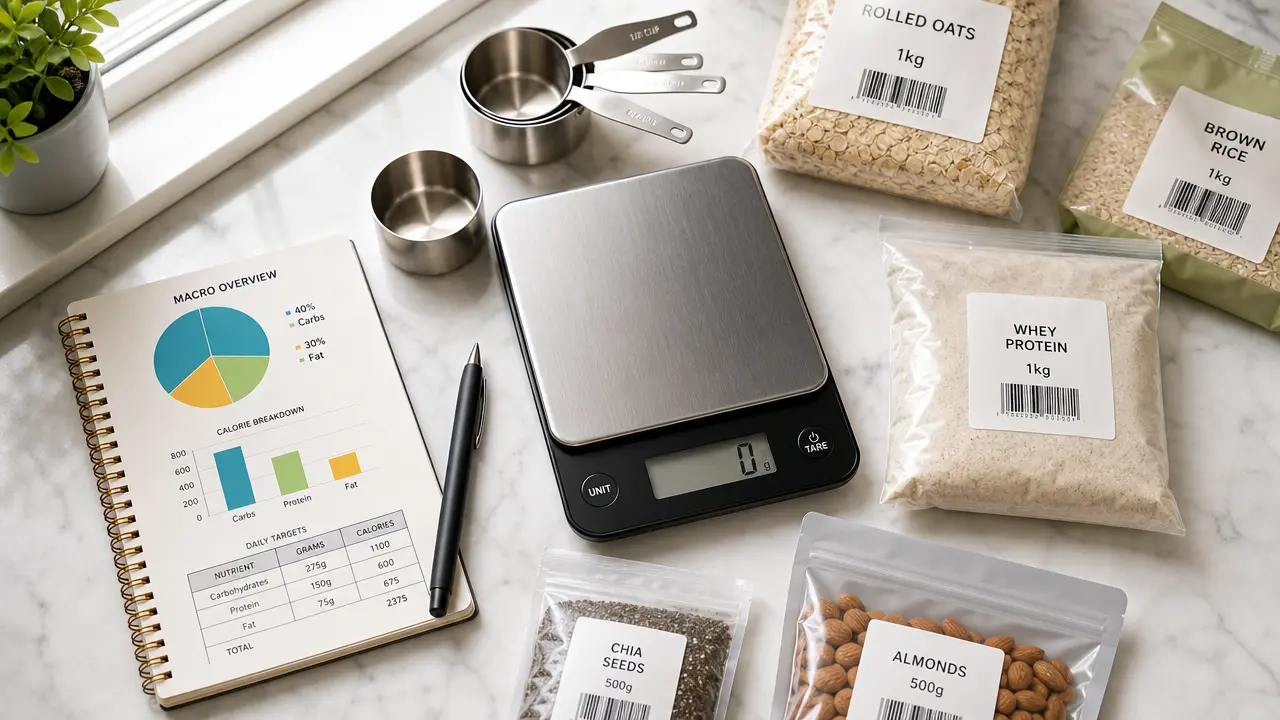
What “cutting” means and why tracking macros works
In nutrition and fitness, “cutting” typically refers to a deliberate calorie deficit designed to reduce body fat while preserving as much lean mass as possible. Many cutting plans fail not because effort is lacking, but because the calorie deficit is inconsistent or protein intake is too low. Tracking macros (protein, carbohydrates, and fat) makes the deficit measurable and repeatable.
A macro tracker for cutting provides a daily framework that can be adjusted based on outcomes. Instead of relying solely on hunger cues or rigid meal plans, macro tracking establishes clear targets while still allowing flexibility in food choices. For many people, this flexibility improves adherence, especially when schedules, dining out, and social events make fixed meal plans difficult to maintain.
Core macro targets for a successful cut
Effective cutting macros generally prioritize protein, then set fats and carbs in a way that supports training performance, recovery, and satiety. While individual needs vary, a macro tracker for cutting is most useful when it follows a consistent setup process and then refines targets using weekly feedback.
Protein: the anchor macro
Protein is commonly treated as the non-negotiable macro during a cut because it supports muscle retention and improves fullness. A widely used range is approximately 0.7–1.0 grams of protein per pound of body weight per day, with many lifters clustering near the upper end during a deeper deficit. A more conservative approach can use 1.6–2.2 grams per kilogram of body weight.
Regardless of the exact number, the practical goal is consistency. Many stalls and “soft” results come from meeting calories but missing protein. A well-configured macro tracker for cutting should make protein tracking prominent and easy to review.
Fat: minimums for hormones and practicality
Dietary fat supports hormone production and helps meals feel satisfying. During a cut, fat intake often lands in a moderate range, with many plans keeping fat at roughly 20–30% of total calories or setting a minimum (for example, 0.3 grams per pound of body weight) and allocating the rest of calories to carbohydrates.
For people who prefer higher-fat foods or feel better with more fat, the split can be adjusted as long as protein and total calories remain on target.
Carbohydrates: performance and flexibility
Carbs often become the “adjustment lever” because they can be increased to support training performance or reduced to deepen the deficit. Carbs can also be timed around workouts for better energy and recovery, although timing is secondary to hitting daily totals.
A macro tracker for cutting should allow easy planning for higher-carb training days and lower-carb rest days if desired, without making the weekly deficit unpredictable.
How to calculate cutting calories (the foundation of macro tracking)
Macros sit on top of calories. Before assigning grams of protein, carbs, and fat, a cut requires a reasonable estimate of maintenance calories and a deficit size that is sustainable.
Step 1: estimate maintenance calories
Maintenance calories can be estimated using a validated equation (such as Mifflin-St Jeor) and an activity factor, or by using weight-history data. In real-world cutting, the most reliable method is observing weight change over 2–3 weeks at a consistent intake and adjusting from there.
Step 2: choose a deficit aligned with goals
A common starting deficit is 10–25% below maintenance, depending on starting body fat, timeline, and training demands. Faster cuts can increase hunger, reduce training performance, and raise the risk of losing lean mass. A moderate deficit is typically easier to adhere to and more predictable.
Step 3: convert calories into macros
- •Set protein first.
- •Set fat second (minimum or percentage-based).
- •Allocate remaining calories to carbs.
Because protein and carbs have 4 calories per gram and fat has 9 calories per gram, most trackers automatically calculate the macro grams once the calorie target and macro priorities are entered.
What to look for in a macro tracker for cutting
Not every app supports cutting well. The best macro tracker for cutting makes logging easier, improves accuracy, and surfaces the metrics that matter for adjusting the plan. When evaluating options, focus on features that reduce friction and prevent common errors.
A reliable food database with verified entries
Large databases can be a double-edged sword. User-generated entries may have incorrect serving sizes or calorie counts. Verified foods, barcode scanning, and the ability to create custom foods and recipes help keep logs consistent.
Recipe building and portion flexibility
Cutting often relies on repeatable meals. A good tracker allows recipe import, batch cooking entries, and editable serving sizes. This reduces “macro drift,” where small logging inconsistencies accumulate into meaningful calorie differences over time.
Weekly reporting and trend tracking
Daily weight fluctuates due to water, sodium, glycogen, and digestion. Trend weight, weekly averages, and clear progress dashboards are essential for cutting. The tracker should support evaluating progress over 2–4 weeks rather than reacting to a single day.
Macro goals by day and scheduling tools
Some people prefer identical macros every day. Others prefer higher-carb training days and lower-carb rest days while keeping weekly calories consistent. A smart macro tracker should support both approaches with minimal setup.
How an AI macro tracker or smart macro tracker can improve cutting results
Automation can streamline the most error-prone parts of cutting: setting targets, estimating portions, and adjusting macros as body weight changes. An AI macro tracker may provide adaptive recommendations based on logged intake, weigh-ins, and training frequency. A smart macro tracker may also offer meal suggestions that fit remaining macros and calories.
Adaptive calorie and macro updates
As body weight decreases, maintenance calories tend to drop. A cutting plan that stays static can slowly turn into a smaller deficit, leading to plateaus. An AI macro tracker can flag when the weekly rate of loss has slowed and suggest a modest adjustment, such as reducing calories by 100–200 per day or increasing activity targets.
Fewer logging mistakes through smarter input
Smart features can reduce selection errors by prioritizing verified entries, learning frequently eaten foods, and prompting for missing information (for example, cooked vs. raw weight or sauces and oils that are often forgotten). Even a small systematic undercount can erase a deficit, so accuracy support is more than a convenience during a cut.
Better adherence through planning and nudges
Cutting success is often an adherence problem, not a knowledge problem. Smart reminders, meal planning tools, and “remaining macros” views can help keep intake within targets without feeling rigid. This is especially useful for everyday eating patterns such as restaurant meals, takeout, and weekend social events.
How to log macros accurately during a cut
Precision matters more in a deficit because there is less margin for error. The goal is not perfection; it is consistent accuracy. The following habits make a macro tracker for cutting much more effective.
Use a digital food scale for calorie-dense foods
Weighing foods is most valuable for items where small differences add up quickly: nut butters, oils, cheese, granola, trail mix, and desserts. Measuring cups can be inaccurate due to packing and shape differences. A scale improves repeatability, especially for staples like rice, pasta, and cereal.
Track cooking oils, sauces, and “bites”
Many stalled cuts come from untracked extras: cooking spray used liberally, dressings, mayonnaise, sugary coffee add-ins, and small snacks. A macro tracker for cutting works best when these items are included consistently, even if estimates are used.
Decide on “raw vs. cooked” logging and stay consistent
Foods change weight during cooking, especially meats and grains. Logging as raw weights can be more consistent if meal prep is done in batches. Logging cooked weights can be simpler for quick meals. Either works, but switching back and forth can create hidden discrepancies.
Build repeatable meals and templates
Repetition is a practical cutting advantage. Saving common breakfasts, lunches, or post-workout meals reduces decision fatigue and makes calorie control easier. Many trackers allow “meals” or “recipes” to be reused, which improves consistency over months.
Adjusting macros when progress stalls
Stalls are common during cutting and do not always require immediate changes. The right response depends on whether the stall is real (trend weight has stopped moving for 2–3 weeks) and whether adherence has been consistent.
Use trend weight and weekly averages
Water retention from higher sodium, increased training volume, travel, or stress can mask fat loss. A macro tracker for cutting should encourage trend analysis. If weekly average weight is still declining, the cut is working even if day-to-day weigh-ins fluctuate.
Check adherence before cutting more calories
Before changing macros, review logs for missing items, untracked restaurant meals, or frequent “close enough” estimates. Tightening logging accuracy often restores the deficit without additional restriction.
Make small, targeted changes
- •Reduce daily calories by 100–200, often from carbs or fats.
- •Add a modest activity increase (for example, an extra 1,500–3,000 steps per day).
- •Prioritize protein consistency and fiber-rich foods for satiety.
Large calorie cuts can backfire by increasing hunger and decreasing training performance, which can reduce total daily energy expenditure over time.
Common cutting mistakes a macro tracker can help prevent
Overestimating maintenance and underestimating intake
Many people unintentionally eat at maintenance while believing they are in a deficit. A well-set macro tracker for cutting helps reveal patterns such as calorie creep on weekends or repeated restaurant meals that exceed estimates.
Letting protein drop on low-calorie days
When calories are tight, protein is sometimes sacrificed first. This can worsen hunger and compromise muscle retention. A strong cutting setup keeps protein steady and adjusts carbs and fats around it.
Chasing daily scale changes
Reacting to single weigh-ins often leads to unnecessary restriction followed by rebound eating. Trend-based progress evaluation is a better fit for cutting physiology and improves long-term adherence.
Ignoring fiber and micronutrients
Macros alone do not guarantee food quality. A cut is easier to sustain with adequate fiber (often 25–35 grams per day, individualized), hydration, and a diet built around lean proteins, fruits, vegetables, and minimally processed carbohydrate sources. Many trackers display fiber and key micronutrients, which can improve satiety and overall diet quality.
Practical macro splits and example setups
There is no single ideal macro ratio for everyone, but a few practical frameworks work well for cutting and are easy to track.
High-protein, moderate-carb (training-focused)
- •Protein: set near the upper recommended range.
- •Fat: moderate minimum.
- •Carbs: higher on lifting days for performance.
High-protein, higher-fat (satiety-focused)
- •Protein: high and consistent.
- •Fat: slightly higher for meal satisfaction.
- •Carbs: lower, with focus on vegetables and fiber.
Weekly calorie budgeting (social flexibility)
Some prefer slightly lower calories on weekdays and higher calories on weekends while keeping the weekly deficit intact. A smart macro tracker can simplify this by setting different daily targets while keeping the weekly average consistent.
Conclusion: the best macro tracker for cutting is the one that supports consistency
A macro tracker for cutting is most effective when it combines accurate logging tools, clear macro targets, and weekly progress feedback. Protein consistency, a sustainable calorie deficit, and trend-based adjustments are the foundation of results. For those who want more automation, an AI macro tracker or smart macro tracker can reduce logging errors, adapt targets over time, and make adherence easier in day-to-day eating environments. When the tracker supports consistency rather than perfection, cutting becomes simpler, more predictable, and easier to maintain through the entire fat-loss phase.